


The question of exercise during pregnancy comes up very often, always with the same questions: can I continue to exercise while pregnant? What type of exercise should I choose? And above all, how do I know when to stop? The answer is simple:
« yes, you can continue to exercise during pregnancy, it is even recommended. »
The benefits of exercise during pregnancy
Although there are not many studies on the subject, those that have been conducted show that moderate physical activity does not increase the risk of premature birth, miscarriage or complications. On the contrary, it has a positive effect: it helps the body prepare for childbirth and also boosts morale – as it does at any other time in life, for that matter.
It has been observed that continuing to exercise helps women enjoy their pregnancy more, as well as the postpartum period. Of course, this doesn’t mean running a marathon if you’ve never run before in your life! But maintaining an appropriate level of exercise will help you stay in shape, manage weight gain better, and promote a more natural and often faster delivery. And after giving birth, it will also be easier to regain your physical balance.
Exercise also reduces the risk of gestational diabetes, having a macrosomic baby (i.e. a baby with a high birth weight), and developing high blood pressure. And as we know, high blood pressure can lead to complications such as pre-eclampsia. So here too, exercise acts as a preventive measure.

Relieving physical pain and strengthening deep muscles
Exercise relieves pain in the pelvis, lower back, sacroiliac joints, etc. This is because relaxin, a hormone produced during pregnancy, causes the ligaments to soften and the pelvis to open, which can cause pain. Moving strengthens our deep muscles, particularly the transverse abdominis, which is the most important abdominal muscle. It runs from the base of the sternum to the pubis, encircling the entire waist and attaching to the lower back. It is like the foundation of a house: if it is well developed, it helps to support the weight of pregnancy, prevent back pain, push more effectively during labour, and facilitate postnatal recovery.
The perineum works in synergy with this transverse muscle. By strengthening it, you also reduce the risk of urinary leakage during and after pregnancy. Furthermore, during pregnancy, it is common to notice the appearance of small urinary leaks during exertion. These are often trivialised: “it’s no big deal, it’s because you’re pregnant”. In reality, even a small leak is a sign that should be taken seriously. It is important to discuss this with your gynaecologist, midwife or a physiotherapist specialising in perineology (physiotherapist in Belgium). These leaks may be due to a perineum that is too relaxed, but sometimes also too toned. Contrary to popular belief, it is not always a lack of strength: a hypertonic perineum can also cause incontinence or pain. In any case, it is essential to consult a professional to adapt the treatment.
This also helps to limit the risk of diastasis, which is the separation of the rectus abdominis muscles (the surface abdominals) along the linea alba. Separation is normal during pregnancy because the uterus takes up space, but diastasis that occurs too early (as early as 4-5 months or before) is often caused by poor daily movements or poor posture. This also often occurs in athletes who have done CrossFit, horse riding or overworked their rectus abdominis muscles before pregnancy. When it comes to abdominal exercises, beware of common mistakes. Crunches (lifting your shoulders towards your knees) should be avoided, both during pregnancy and after childbirth. They increase intra-abdominal pressure, aggravate diastasis and put excessive strain on the perineum. This can lead to lower back pain, hernias or even worsen incontinence. Abdominal and perineal rehabilitation should always be done with appropriate exercises, never with crunches.
Suitable sports to focus on
It is essential to practise suitable sports, such as prenatal yoga, prenatal Pilates or aquagym. These disciplines allow you to work your muscles gently, avoiding intense effort on the rectus abdominis muscles, while promoting their stretching and flexibility. The result: diastasis is limited, labour is more likely to be shorter, the risk of caesarean section is reduced, and overall mental health is improved. Exercise also helps to combat prenatal and postnatal depression, which is no small thing.
However, caution is advised in certain situations. There are contraindications, so always discuss this with your doctor, gynaecologist or midwife. And of course, do not start any intense exercise during pregnancy! A good guideline if you are running or doing cardio is to be able to talk at the same time. If you are so out of breath that you cannot hold a conversation, the intensity is too high.
The official recommendation is to do between 150 and 180 minutes of moderate physical activity per week, spread over 3 days. That said, you should adapt this to your state of health and stage of pregnancy. Obviously, you’re not going to do 5 hours of sport at the end of the 9th month!
During exercise, you should watch out for certain warning signs: excessive breathlessness, chest pain, uterine contractions, bleeding, suspicious discharge (particularly amniotic fluid), dizziness, discomfort or headaches. If in doubt, stop and consult your doctor.
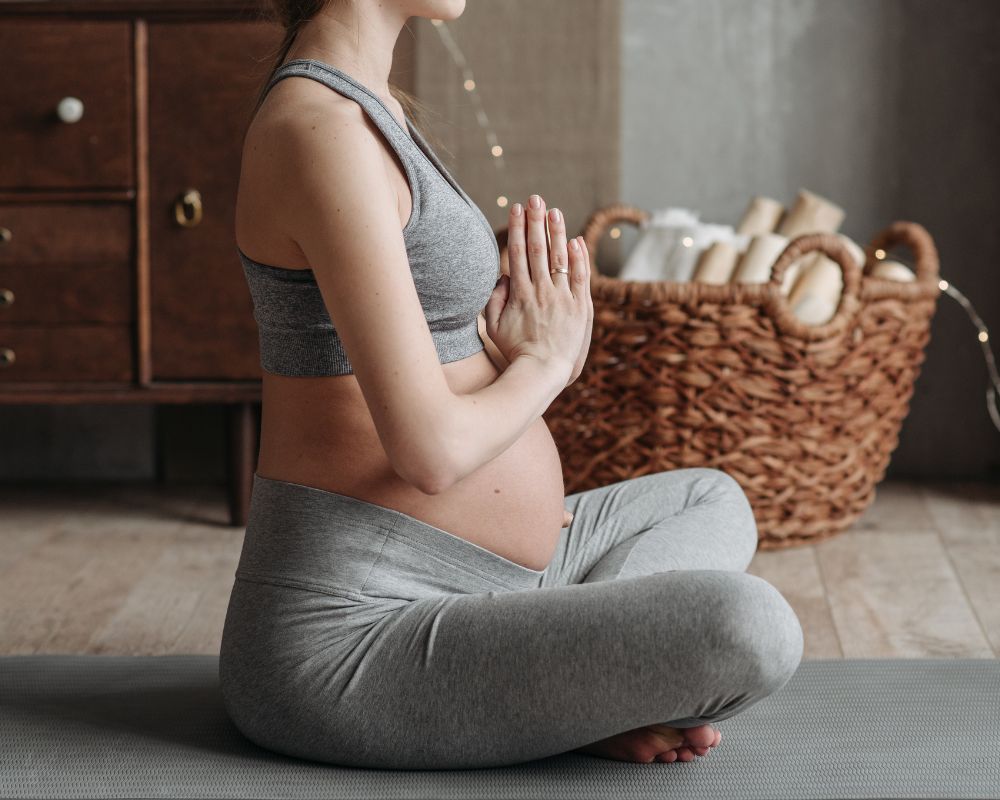
One of the best sports to do is yoga, which helps you reconnect with yourself, your breathing, flexibility and mobility. Many classes are taught by midwives or professionals trained in the physiology of motherhood. The only caveat is to be careful not to overstretch, as relaxin makes your joints more flexible. Pilates is also excellent: it strengthens your core while mobilising your pelvis. Walking is gentle, adaptable and enjoyable. Swimming provides a very pleasant feeling of lightness and is easy on the joints.
However, avoid all high-impact sports (boxing, combat sports), disciplines involving apnoea, sports with a risk of falling, or so-called extreme sports. The goal is to do yourself good, not to put yourself in danger.
In conclusion, you simply need to find an activity that is suited to your body and stage of pregnancy, an activity that you enjoy and that allows you to keep moving right up until the end. In my coaching sessions, I have students who come right up until their last day of pregnancy, and this is entirely possible when the practice is well adjusted. At the end of pregnancy, we work on opening the pelvis and improving mobility to make room for the baby. I highly recommend Bernadette de Gasquet’s method, which I believe is the best way to prepare for childbirth, with adapted yoga and Pilates.

