

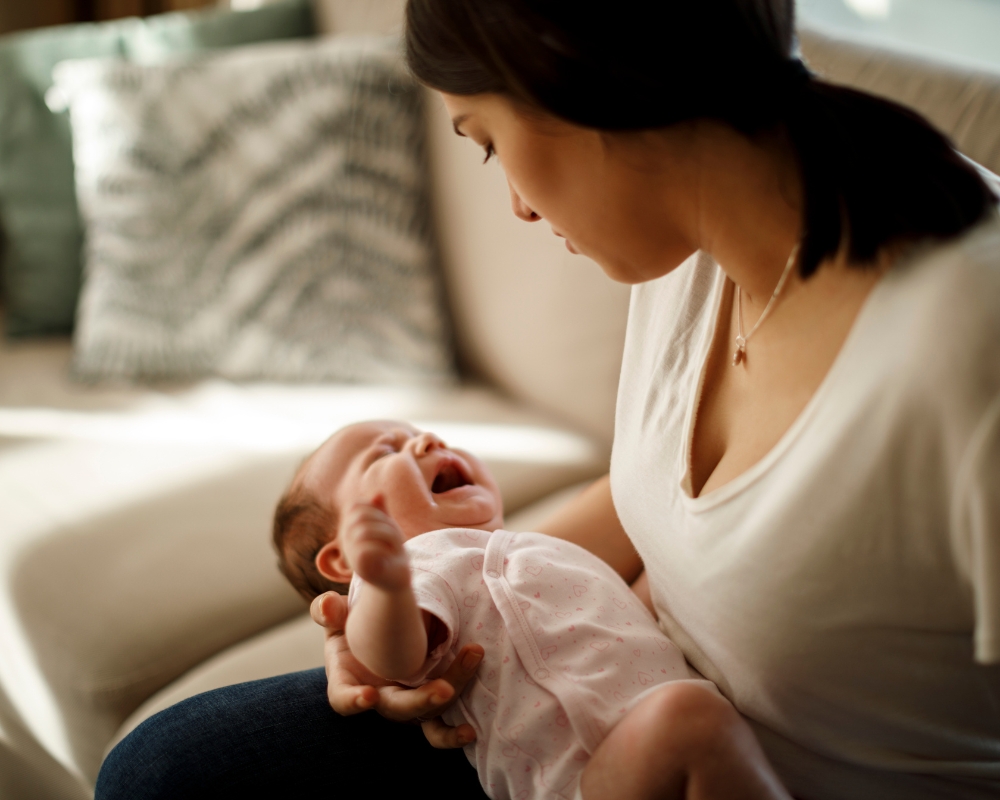

A baby’s crying always affects us, sometimes deeply. It never leaves us indifferent: depending on its intensity, the context, the age of the child, our own physical or emotional state… and even our personal history, it can move us, tire us, annoy us or plunge us into a feeling of helplessness. And all of this is perfectly normal.
Understanding what this crying awakens in us is often the first step towards better supporting them, without judging ourselves.
Baby’s crying: an instinctive but also emotional response
It is no coincidence that a toddler’s crying triggers an almost immediate reaction in us. Our ancestral memory plays a big part in this: in the past, a baby’s crying could signal danger or attract predators… We have retained this biological, almost visceral alert within us. It is therefore natural to feel a sense of urgency to stop the crying as quickly as possible.
But there is another, more intimate dimension: our child’s crying often awakens our own inner child. The way in which we were, or were not, comforted when we cried – listened to, consoled, ignored, repressed – sometimes resurfaces unconsciously. This is why it is important, if possible, to explore your own emotional history when you become a parent. This can help you distinguish your own emotions from those of your baby.
Crying, a language in its own right
We often associate a baby’s crying with pain, sadness or distress. Sometimes wrongly. Because crying is, for them, a real means of communication: they cry to express a need, call for help, say that they are stressed or uncomfortable, or simply to release emotional tension.
A baby has no other language. For them, crying is not a whim. It is a natural outlet, a way of existing, of regulating themselves, of saying, “I need help” or “Something is wrong”.
Ideally, in these moments, the child should be accompanied in their crying. Not “calmed” at all costs, but listened to, contained, supported. This is where your role as a parent comes in – and this is also where the task can become difficult.

Accepting crying… without forgetting yourself
Dealing with a baby’s crying can sometimes be emotionally demanding. It depends on how tired you are, how much help you have, how long and how intensely the baby cries, but also on how others view you or the demands you place on yourself (“I should be able to do this on my own”, “I mustn’t break down”).
Let’s be clear: a baby does not cry to manipulate you. They are not “testing” you. They are simply trying to express what they are feeling, what they are experiencing, what they need. And often, they just need your presence, your arms, some reassuring human contact.
But it’s not always possible to respond to their cries immediately. And that’s also part of being a good parent: recognising your limits. If you feel like you’re losing patience or reaching your limit, it’s essential to think about yourself. This may mean handing over to someone you trust or taking a few minutes’ break (making sure your baby is safe).
Respect yourself to be a better parent
Accepting your child’s emotions starts with another essential step: accepting your own emotions. You have the right to be tired, overwhelmed, annoyed. You also need to be heard, supported and listened to.
And remember: it is by learning to recognise and experience your emotions that you show your child that they can do the same. It is an invisible but valuable lesson.
In summary
A baby’s crying is not an anomaly to be corrected, but an expression to be accompanied. If this sometimes seems difficult, it’s not because you’re a “bad parent”, it’s because you’re human.
Take care of yourself as much as you take care of your child. Ask for help. Take breaks. And above all, be kind to yourself. You are learning together.

